
Black History Spotlight: Fannie Lou Hamer
Often omitted from historical conversations, African diaspora have had a monumental impact on the advancement of the United States as the backbones of American capitalism as well as the artists, writers, inventors, philosophers, and others who helped shape American thought and culture. This series aims to highlight Black excellence, ingenuity, and innovation in the world of agriculture and food security. Henry Blair, George Washington Carver, and Fannie Lou Hammer were all vanguards in food production and distribution, laying important groundwork for the food system we all enjoy today.
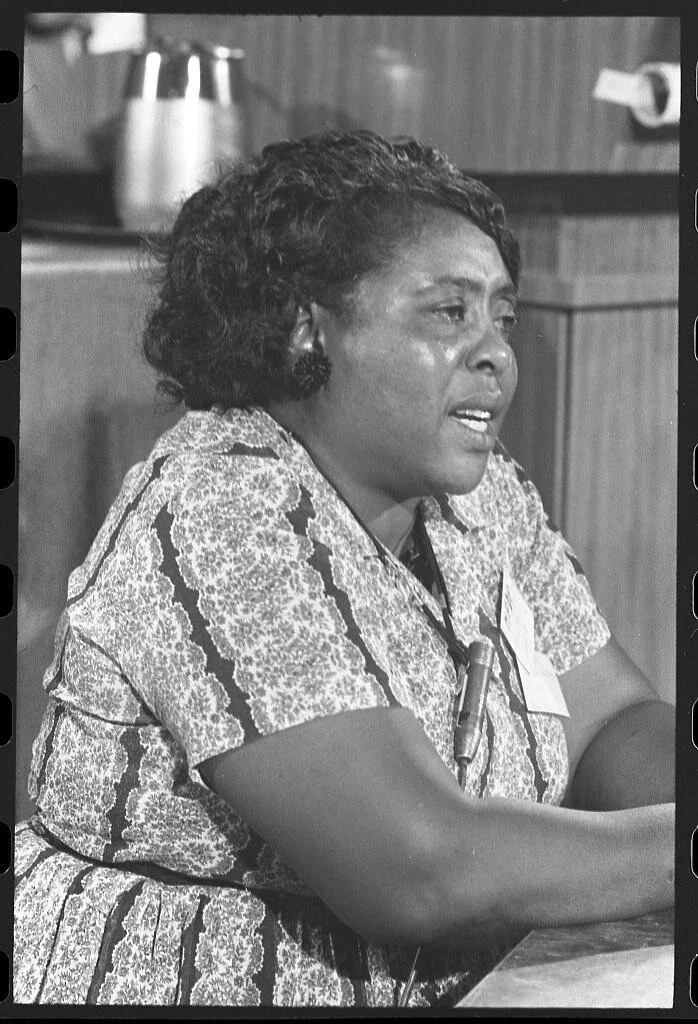
Fannie Lou Hamer: Civil Rights Activist and Freedom Farm Cooperative Founder
(1917-1977)
Fannie Lou Hamer is heralded as one of the most influential voices in the civil and voting rights movements. But her legacy extends beyond the world of mainstream activism and non-violent direct action to include targeted steps she made through farming to promote equity and level the economic opportunities of Black Americans.
Born to sharecroppers in Montgomery County, Mississippi, Hamer grew up picking cotton and was forced to leave school at the age of 12 to work full-time. She went on to marry Perry Hamer, and the couple worked on B.D. Marlowe’s plantation in Mississippi where Fannie Lou, the only literate worker, served as plantation timekeeper.
In the summer of 1961, Hamer attended a meeting for the Student Non-Violent Coordinating Committee (SNCC). She was infuriated by the deliberate and debilitating oppression of the Black vote and signed on as a SNCC organizer. The following summer, she would lead 17 volunteers to register to vote just to be denied by an discriminatory literacy test. On their return, their bus would be charged a $100 fine for the crime of a “too yellow” bus, and Hamer would be fired by Marlow for her attempts to vote.
From this point, Fannie Lou was catapulted into a life of racial and social activism. She protested “white-only” designations, organized the Freedom Summer, and co-founded the Mississippi Freedom Democratic Party to challenge the lack of representation and rampant voter repression of Black citizens. Her efforts would lead her to become a member of the first integrated delegation of Mississippi in 1968. In 1971, she would help found the National Women’s Political Caucus.
With time, Hamer tired of the slow turning wheels of the political process and opted for a more direct approach using the channels of economic reform to promote social equity.
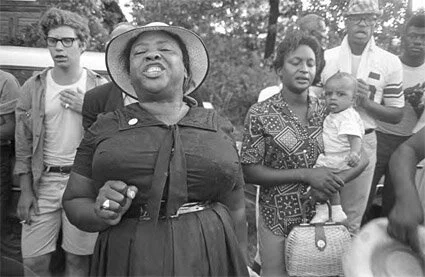
Fannie Lou Hamer in the 1966 March Against Fear.
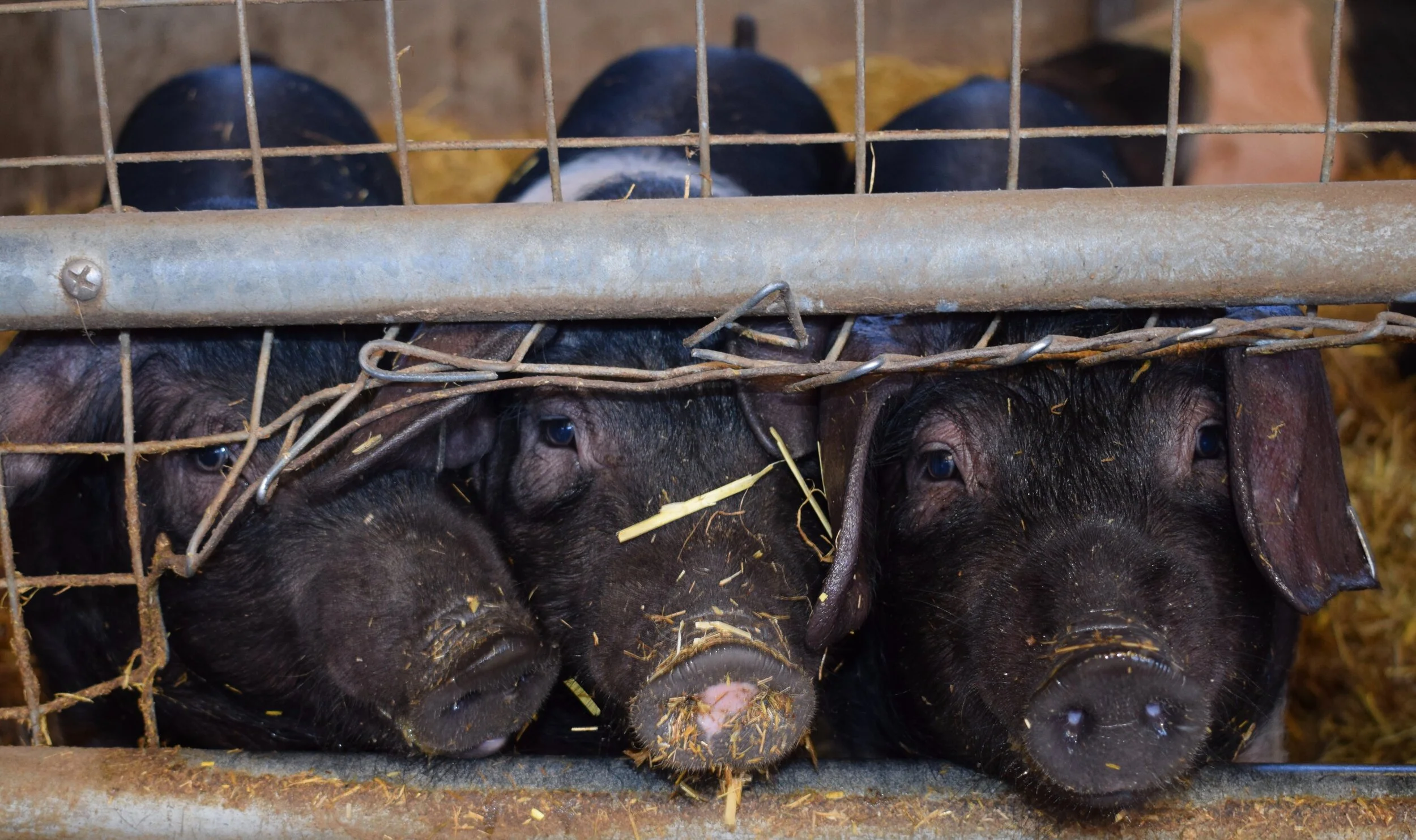
In 1968, Hamer began an innovative campaign to help bolster Black economic independence: a pig bank. The pig bank provided free pigs to Black farmers to breed and slaughter. Starting with just thirty-five gilts (females) and five boars (males), the program would grow within a few years to produce thousands of pigs. Her aim was to empower autonomy within the Black farming community which had long been at the mercy of White landowners, but she also had a special fondness for pork products: “There’s nothing better than getting up in the morning and have … a huge slice of ham and a couple of biscuits and some butter… I wouldn’t take nothing for our golden pigs.”
A year later, in 1969, Hamer would found the Freedom Farm Cooperative (FFC), a food sovereignty program to lift Black people out of poverty, using a $10,000 grant to purchase 40 acres of land in Sunflower County.
The co-op functioned simply: members paid $1/month planting soybeans, cotton, and other cash crops on part of the land to cover taxes and other expenses, while the rest of the land was left to farm produce that was distributed to co-op workers.
This grassroots model with hands-on engagement was critical to the success of the co-op, and proved an effective model, yet still there were barriers. At first, only 30 families were able to afford the membership fee yet 1,500 belonged to the Freedom Farm by name. This didn’t stunt the success of the program. Freedom Farm flourished in the following years purchasing an extra 640 acres for cultivation. Freedom Farms built out its aid offerings to include a garment factory, sewing cooperative, tool bank, and affordable housing opportunities centering dignity and community in all programs. Eventually, the model proved unsustainable due to the lack of institutional backing.
The work of Fannie Lou Hamer and the Freedom Farm provides the first example of this co-op programming and highlights the potential of mutual aid as well as its vulnerability without federal, or at least municipal, support. Hamer’s work encompasses ideas of food sovereignty, education, subsistence farming, and the basic idea of feeding people. She had a truly intersectional approach to justice and understood the need to preserve dignity and the need to let “local people do their thing themselves.”
Explore, Learn, and Support Local
Honor Black History Month through (un)learning, self-reflection, and participation on a local level.
Newtown Nation Farmers Market
Dates: Fridays and Saturdays from 10am to 5pm
Location: Dr. Martin Luther King Jr. Park at the corner of Dr. Martin Luther King Jr. Way and Cocoanut Ave.
More about Historical Newtown and Newtown Alive.
Black Owned Restaurants in Sarasota (click)
Black Owned Businesses in Sarasota & Manatee (click)
Explore Local History
View Florida Memory’s Photo Exhibit: Racism and the Struggle for Civil Rights in Florida
Learn More about Sarasota School District’s desegregation