
Black History Spotlight: Henry Blair

Often omitted from historical conversations, African diaspora have had a monumental impact on the advancement of the United States as the backbones of American capitalism as well as the artists, writers, inventors, philosophers, and others who helped shape American thought and culture. This series aims to highlight Black excellence, ingenuity, and innovation in the world of agriculture and food security. Henry Blair, George Washington Carver, and Fannie Lou Hammer were all vanguards in food production and distribution, laying important groundwork for the food system we all enjoy today.
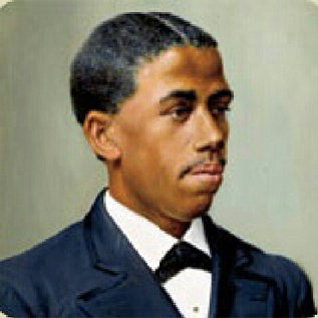
Henry Blair: Farmer and Inventor
(1807-1860)
Once considered the first Black man to hold a patent — before it was uncovered that Thomas Jennings received a patent for dry cleaning — Henry Blair revolutionized planting as we know it. Passionate farmer and free man, Blair would become famous for his contributions to the agricultural world with his invention of the corn and cotton seed planters.
Illiterate, Blair signed the influential patent No. x8447 in 1834 with a simple “X”, securing his claim to the corn planter. The invention was simple in its ingenuity. Pulled by a horse, the wheel-barow-like machine opened a furrow dropping the appropriate amount of corn seeds at optimally distanced intervals then closed the ground behind it, allowing corn to be planted rapidly with minimal human effort and keeping weeds under control. Blair’s invention would go on to be featured in an issue of The Mechanic’s Magazine where he was cited as believing the machine would help save the labor of 8 men.
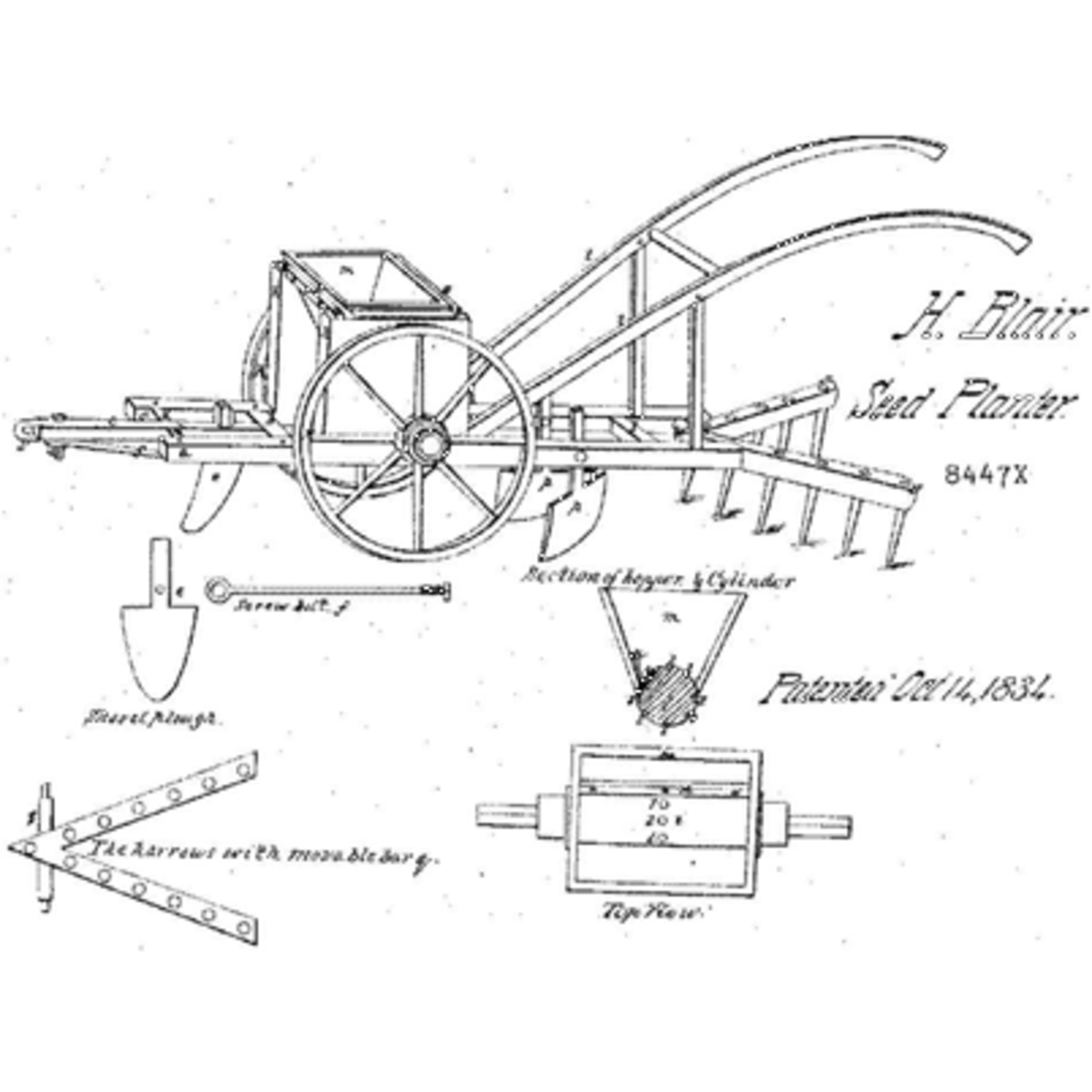
Just two years later, in 1836, Blair returned for another patent: a revision of his corn planter adjusted for the specific needs of cotton planting. For his cotton seed planter, the horse drawn machine had two blades fixed in the back that opened up the soil allowing for seeds to be dropped in and covered by a wheel-driven cylinder.
On both his corn and cotton seed planter patents, Henry Blair was identified as a “colored man” — the only patents from the United States Patent Office to ever acknowledge an inventor’s race. In the 1830s, at the time his patents were granted, US patent law permitted both freed and enslaved individuals to obtain patents; however, this law was reversed in 1858 when a slave-owner claimed ownership of “all the fruits of [his] slave’s labor”. The new law stated that since slaves were not citizens, they could not hold patents. This reversal further dehumanized Black people and robbed many of the rights to their own intellectual property.
Though little is known of his personal life, it is clear that Blair left an indelible mark on food production facilitating planting as no one had before. Today, we see the effects of Blair’s inventions in most industrial planting devices that carve open the ground, deliver seeds, and reseal the soil. It begs the question: what would our food system, our society, look like without him?
Explore, Learn, and Support Local
Honor Black History Month through (un)learning, self-reflection, and participation on a local level.
Newtown Nation Farmers Market
Dates: Fridays and Saturdays from 10am to 5pm
Location: Dr. Martin Luther King Jr. Park at the corner of Dr. Martin Luther King Jr. Way and Cocoanut Ave.
More about Historical Newtown and Newtown Alive.
Black Owned Restaurants in Sarasota (click)
Black Owned Businesses in Sarasota & Manatee (Click)
Explore Local History
View Florida Memory’s Photo Exhibit: Racism and the Struggle for Civil Rights in Florida.
Learn more about Sarasota School District’s desegregation.